Receive a 20% Discount Off all trees when collected from the nursery, A collection time must be arranged with the nursery before travelling. Discount IS NOT applicable to sundries. Use code: collect2023 Dismiss
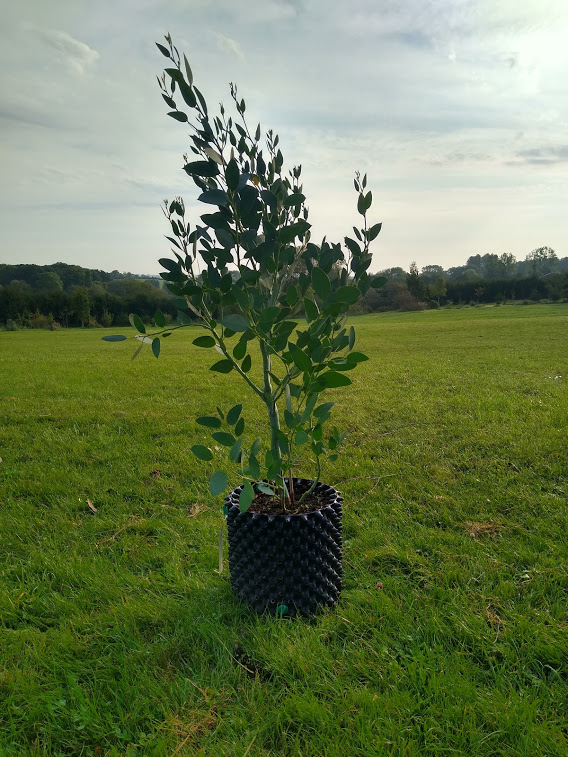
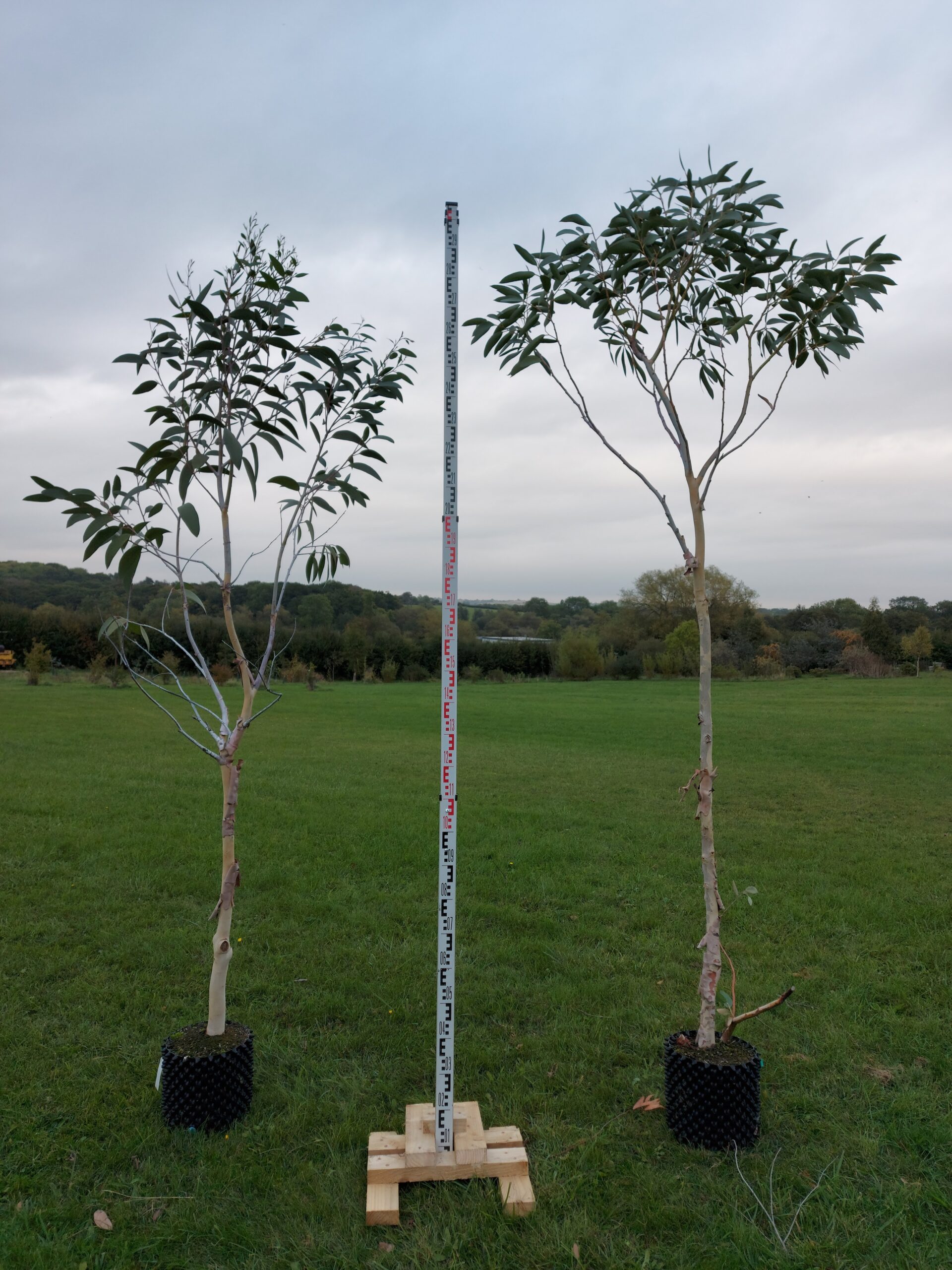
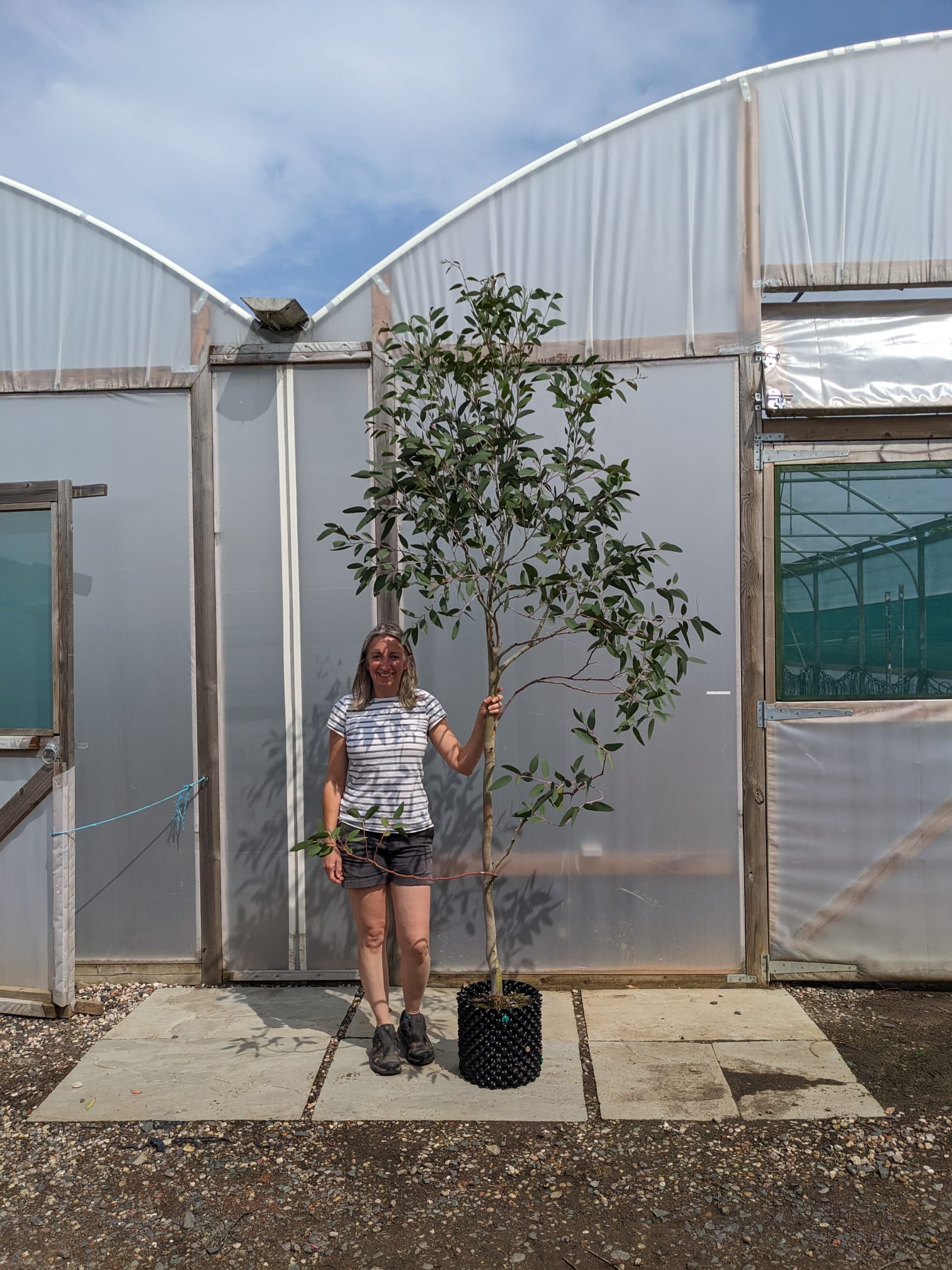
Eucalyptus niphophila
FREE PURE ENGLISH WOOL MULCH MAT WITH EVERY TREE PURCHASED
Why we like this variety:-
This gum is almost as well known as the ubiquitous Eucalyptus gunnii and is certainly hardier than the latter. Its full name is Eucalyptus pauciflora subspecies niphophila
Fabulous ornamental tree with nice table manners: well-behaved, beautifully appointed and not greedy like E gunnii.
Hop over to the ‘How to Use’ Tab to see how this species can be enjoyed or used in the landscape or garden – such as growing in a pot, as a bushy shrub, standard tree or for cut foliage etc.
The ‘Planting and Soil’ Tab advises on this Eucs preferred growing conditions– its likes and dislikes
The Trivia Tab is just that!! It contains fascinating information for botanical nerds like me!
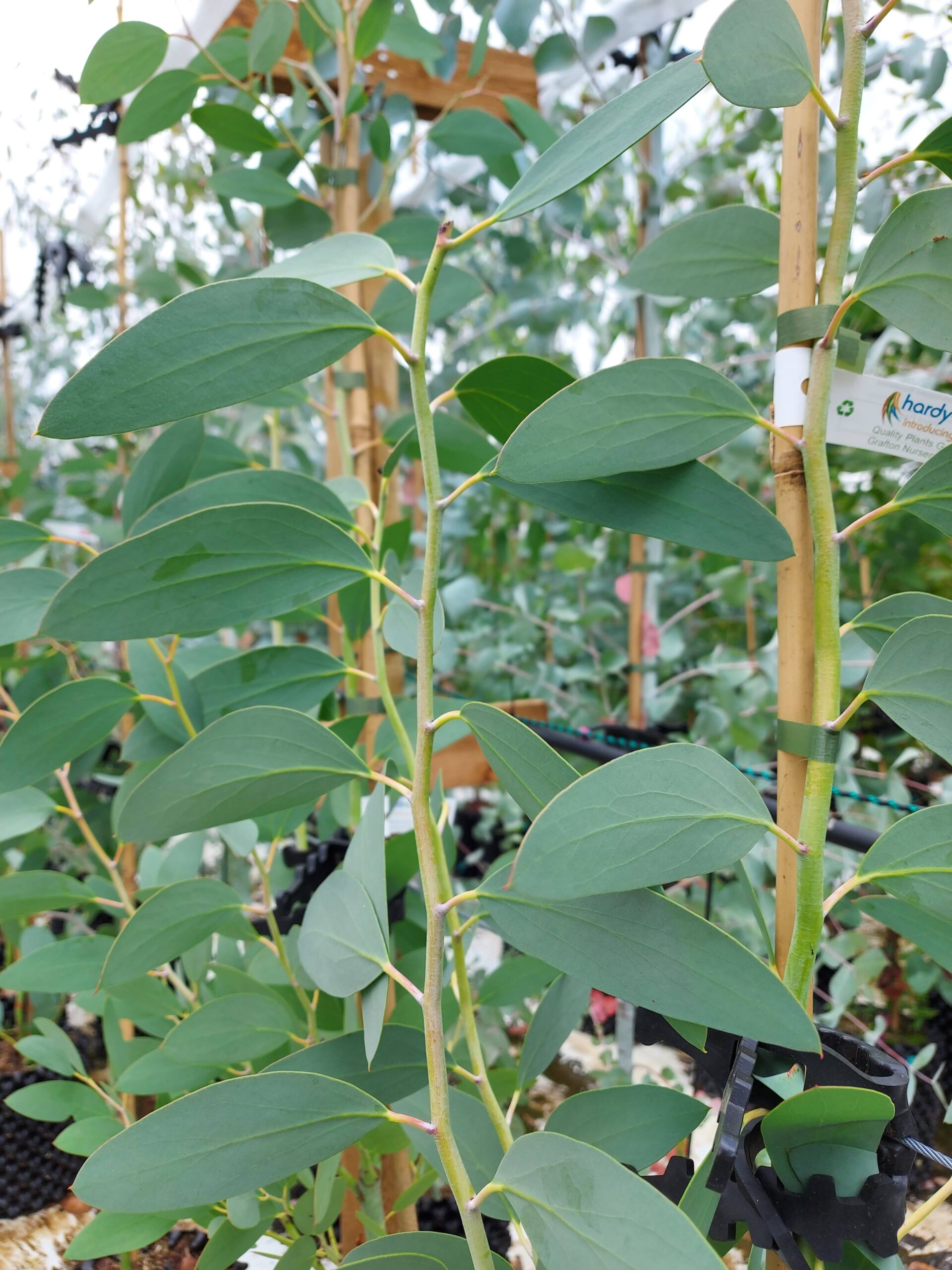
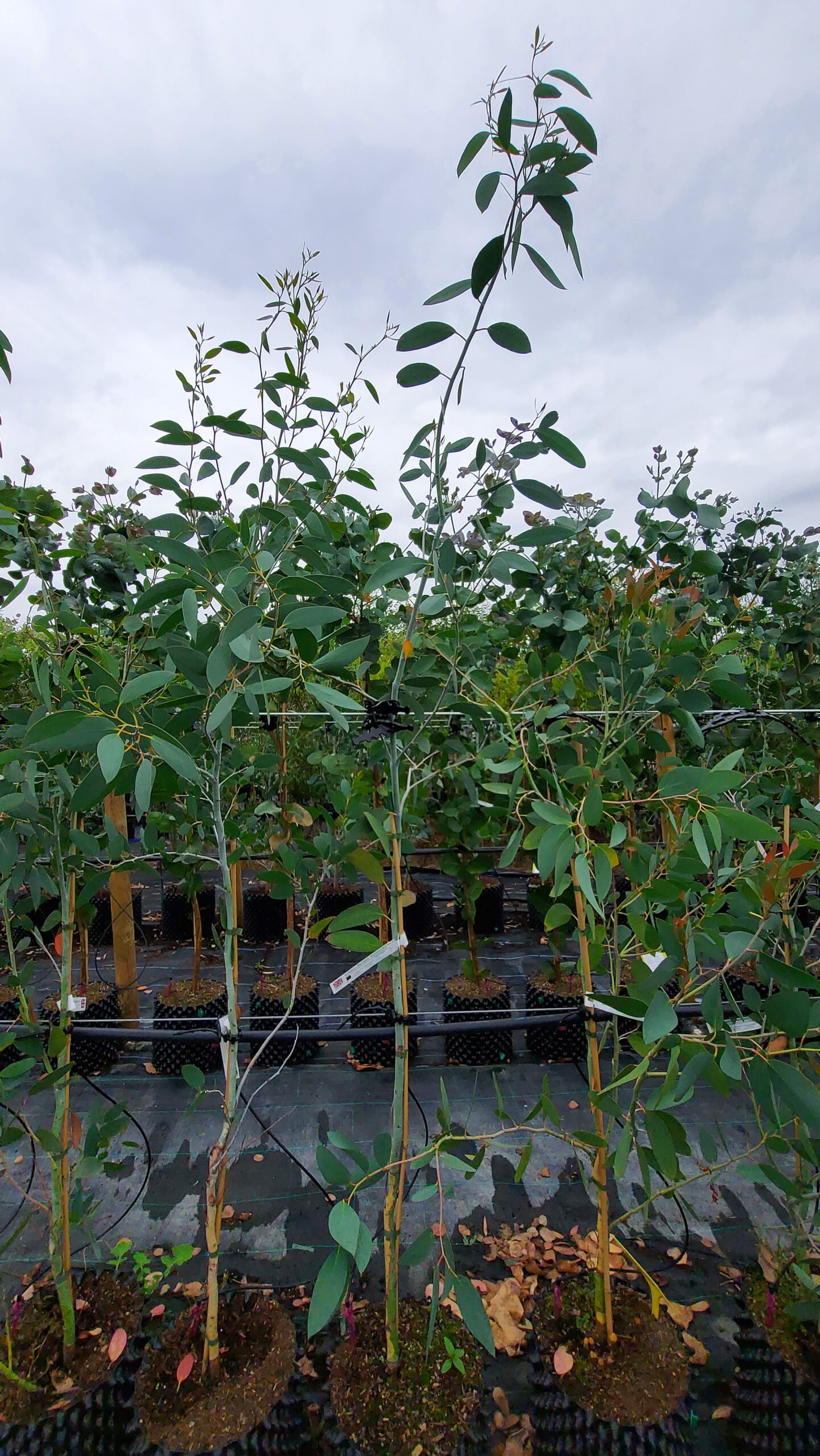
Shoots ‘n Leaves: Very ornamental foliage. Young shoots are glaucous
Juvenile leaves are French-blue/grey, glaucous, ovate about 2.5-7.5cm long and 2-3.5cm wide
Adult leaves shades of French-blue/grey to olive green, becoming glossy. Sickle shaped or elliptical, 5-10 cm long and 1.2-3 cm wide, thick texture with parallel veins
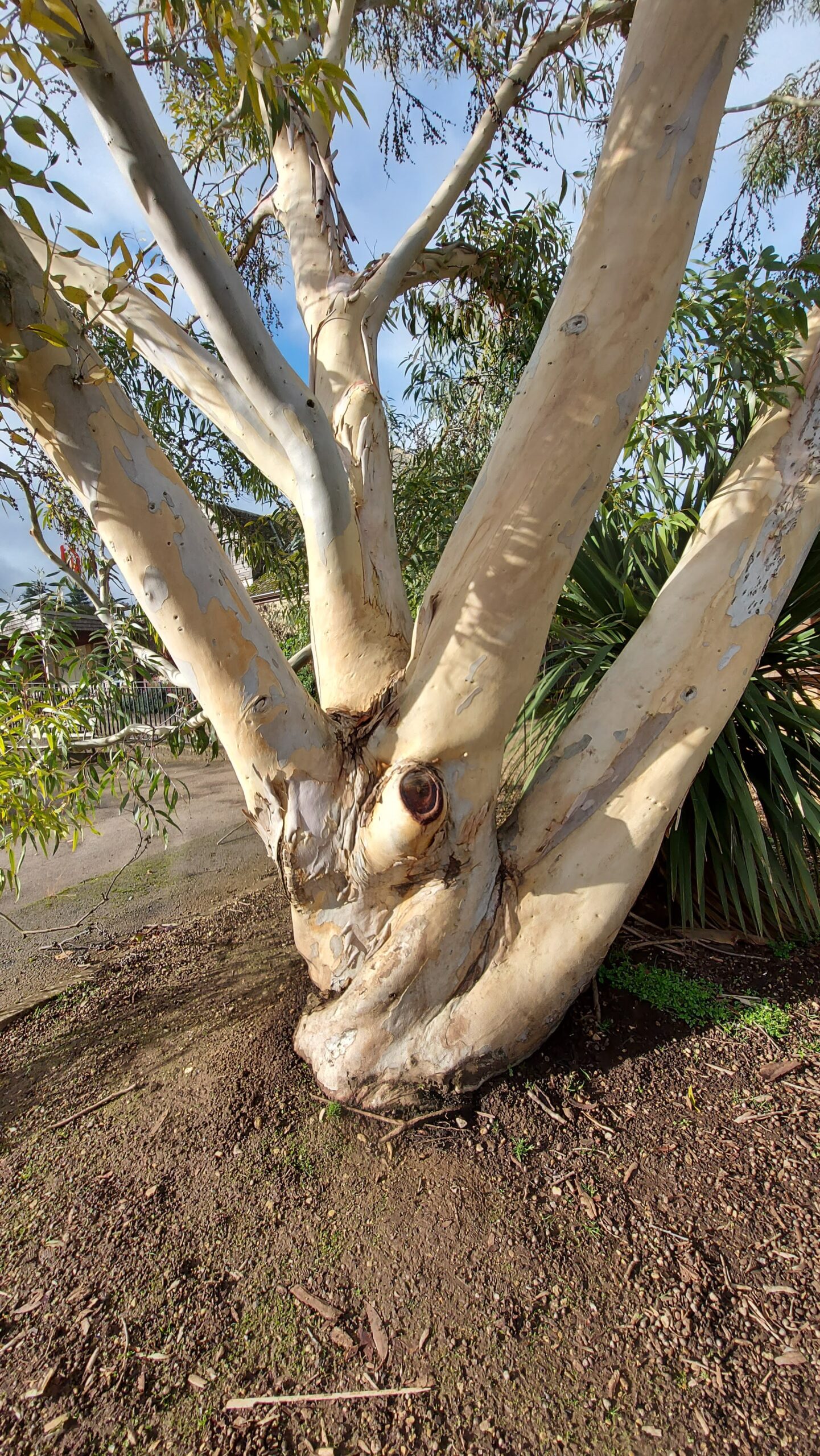
Bark: One of its best features – smooth striking bone white to cream; peeling bark in seal grey, foxy red, olive green, copper and cream, sheds in ribbons from main branches and the trunk.
Flowers: produced in large quantities, white, fluffy and loved by bees
Leaf Aroma: typical but faint Eucalyptus. Snow gums have no requirement for strong eucalyptol as very little attacks them in the wild
Rate of Growth: medium 1.0-1.5m (3-4ft) per year. Slow for a Euc. at 1m or less per year, quite fast by other tree standards
Height in maturity, if left unpruned: after about 15-20 years, Eucalyptus niphophila could reach approximately 7-10m, although some specimens can attain a greater height under optimal conditions. Easy to keep smaller by regular pruning – March 18th and end of May.
The ultimate height of E. niphophila can vary. It depends upon the combination of the seed provenance (exactly where the seed came from) and your garden’s growing conditions.
It needs to be kept in mind that it is one of the slower growing species; producing a shorter tree when grown on a tough, exposed, free draining ridge as a screen. It will be taller when cultivated in a warm, sheltered, well-irrigated garden with a free draining soil. There are records that it can reach up to 10-12m as a single stemmed standard tree; shorter if coppiced and grown as a multi-stem. Others have cited that it can grow between 10 – 15m and these trees may well have been grown from seeds of taller parental clones.
Euclid (the most definitive work on Eucalyptus to date) states that E. pauciflora subsp. niphophila will reach around 7m (about 20ft) in its harsh native environment.
If pruned, it can be trained to form a bushy screening tree, a lollipop standard or a multi-stemmed bush like a species rose or coppiced Hazel tree. Responds well to coppicing and pollarding, when done at the right time of year AND provided your tree is large enough to be able to bounce back. Unless you are growing for cut foliage, please refrain from voluntarily electing to prune your Eucalyptus from August through to February; it can kill it.
To receive monthly pruning and aftercare advice, sign up to our Gumnut Club – its free and you can unsubscribe at any time. To subscribe – just call or ping us an email to [email protected]
Click here for further advice on pruning can be found in our Guidance Notes
Click here to visit our pruning video
Hardiness: Eucalyptus niphophila is one of the hardiest species after E. pauciflora subsp. debeuzevillei. Our trees survived the bad winter of 2010. Good hardiness rating, root-system should be happy down to around -14 to -20°C, once mature.
Hardiness in Eucalyptus is governed by
For more information on how to increase the winter hardiness of your Eucalyptus – click here to see our Guidance Notes. These notes on how to help your Euc become more hardy in your garden setting are quite long and I’ve been told ‘not for the faint-hearted’!
They are meant to be quite all-encompassing and well-intentioned. You can always skip to the last page to look at the salient points!
Eucalyptus niphophila Requirements:
Recommendations:
How to use in the landscape and/or garden: How to grow or train it to get the best out of it
Popular and justifiably well-loved, the Weeping Alpine Snow Gum, along with its selection Mt Bogong, is one of the most popular of species
Fabulous Specimen Tree for the wider landscape, arboretum collection or avenue planting and for the medium-sized to larger garden
Commercially: a good choice for public open spaces, parks, business parks, university campus. E. pauciflora subsp. niphophila is the best known of the six ‘pauciflora’ sub-species; deemed to be one of the most-hardy of all Eucalypts and moderately slow growing. After taking a few years to establish, diligently putting down its roots, this snow gum will grow a little faster.
Being highly ornamental with beautiful bark, it is a valuable addition to any winter garden plant grouping.
Tough and tolerant of difficult growing conditions it is useful as a large open evergreen screen with attractive bark detail. It can be planted out in farmland and used for wild life protection and game cover, where, for example, pine trees are suffering disease problems.
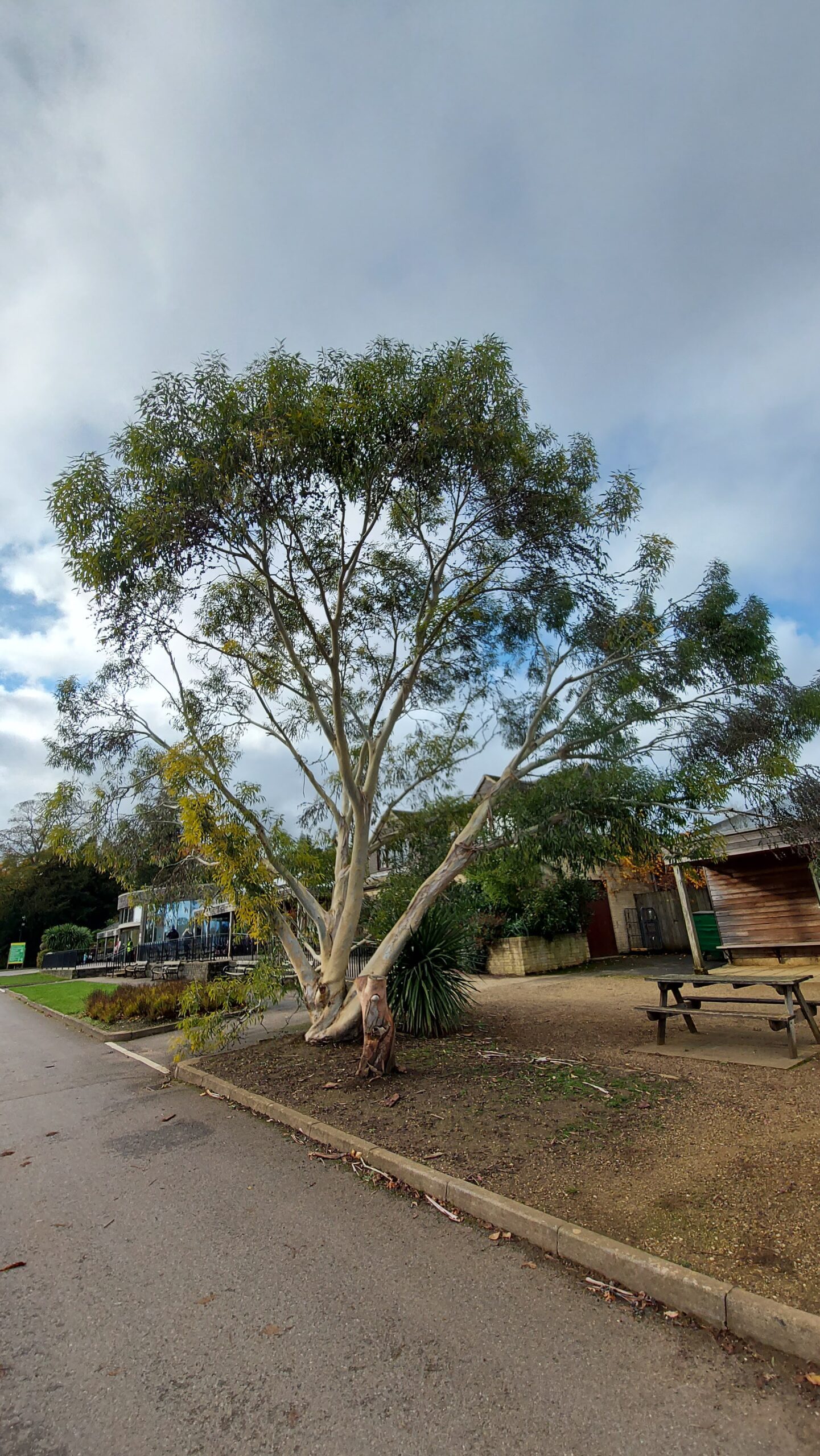
The photograph of the large tree trunk is of a E. pauci. subsp. niphophila taken at the Cotswold Wildlife Park thriving in their carpark on Cotswold stony alkaline (limey) soil.
Growing a full-sized standard: planting the tree and running away is an option, but it won’t necessarily give you the best results.
We suggest you maintain a leading shoot and tip prune the lateral shoots to encourage bushiness. Keep all the sides shoots as they are building up the strength of the main trunk.
For more, see our guidance notes for growing specimen Eucalyptus in our Help and Advice section.
For monthly emails on how and when to prune and care for your Eucalyptus, sign up to our Gumnut Club and we’ll send you the Bush Telegraph – it’s totally free and you can unsubscribe at any time.
Growing shrub-on-a-stick clipped standard: this is an opportunity to grow a Eucalyptus in a confined space like a courtyard and also control its overall size. You can produce a small tree on a trunk with a height of anywhere between 3m (10ft) and 4m (12ft). Prune back growth every March 18th or thereabouts and tip prune the annual growth back by up to 90% at the end of May. Light tip pruning can be done again during July, but no later. Don’t prune from August through to February.
Growing a multi-stemmed bush or tree. Eucalyptus pauci. subsp. niphophila responds well to coppicing and readily produces a multi-stemmed specimen. However, we do not recommend coppicing the tree until it has attained a trunk of some 125 mm or more in diameter. Coppicing needs to be carried out at the end of March, beginning of April at the latest.
Why would you want coppice a Eucalyptus?
To create:
REMEMBER: No grass, no weeds and a thick bed of bark chip mulch, to a depth of 150 mm (6 inches) are essential to assist with good establishment. Our research trials have demonstrated that grass around the trunk of Eucalyptus prevent the trees from quickly establishing and can completely stop them from growing.
Pot Culture outdoors: Eucalyptus pauci. subsp. niphophila can be successfully grown as a multi-stemmed shrub in a container provided you are prepared to pot on at the recommended intervals and to supply it with sufficient water and food during the growing season.
Always keep pot-grown Eucalyptus in the air-pot container system for healthy and happy trees.😊 They do not thrive in smooth-walled containers ☹
For information on how to successfully grow Eucs in pots, visit our Blog entitled ‘How to grow a Eucalyptus in a pot and keep it alive!’
Hedge-Screens:
Eucalyptus pauci. subsp. niphophila is a good choice for a hedge-screen as it readily produces sub-lateral shoots – i.e. branches off the side-branches and finds no problem in becoming bushy. This is unusual for most Eucs.
Always prune your hedge-screen March 18th and maintain a profile like a capital ‘A’. That is broad bottom, narrow shoulders and a flat head. This allows light to all parts of the hedge and keeps it bushy. If you let your hedge develop into the shape of a capital ‘V’, its bottom will open up…not a great look!
Floral Art: Eucalyptus pauci. subsp. niphophila is not on our general ‘Cut foliage’ list, but it does usefully allow for an extended cutting season into early April. On a domestic level, I see no reason why you could not use the odd branch in a vase of flowers.
Firewood Production: Eucalyptus pauci. subsp. niphophila is not on our selected species list for Biomass or Firewood.
Do give us a call on our nursery mobile 07307 413 052 if you would like to discuss growing firewood with one of our consultants
Rural/Agricultural:
Ecology:
Environmental:
Tolerant of exposed conditions and salty sea air, E. pauciflora subsp. niphophila is good for both high altitude planting and for windy and exposed locations.
I have read that ‘in the wild it can be seen clinging to snowy ridgetops and in alpine meadows (and lining ski runs!)’. They are so hardy as to have even been introduced to Norway.
Growing on the Coast Snow gums have extra-thick leaf cuticles, which make them extremely tolerant of cold exposed conditions and salt laden winds, once mature in the ground. To make this work, we recommend that:
Shelter Belts and Windbreaks E. niphophila can be grown to form a good evergreen windbreak when planted as a single species stand. It can be mixed in with other plant species provided care is taken to mitigate competition from other plants whilst the Eucalyptus is establishing as they don’t compete well when young. We recommend that you establish the Eucalyptus for a year prior to planting additional species or you install an automatic irrigation system to ensure your Euc is receiving sufficient water.
We recommend
Drying up wet soils niphophila prefers to live in normal free draining soils, so would not be ideal for planting in soil that requires drainage
Tolerant of cold and exposed growing environments inland E. niphophila will grow in open fields and pasture, once established.
We recommend
Tolerant of poor stony soils once established niphophila does not require a rich soil and can survive in poor, stony soils. Tolerant of arid environments, poor stony dry soils once established. It is essential that your Euc. is given our recommended quantity of water for its first 2 growing seasons in your grounds, during its establishment phase before you abandon it to its fate. The tree needs to establish a good, deep root system before it can survive in dry, challenging conditions. No grass, no weeds and a thick bark chip mulch, to a depth of 150 mm (6 inches) are essential to assist with good establishment. Growth on impoverished soils will always be reduced.
Common Name: Snow Gum, Gum-topped Bloodwood
Status: Evergreen Tree MYRTACEÆ; Myrtle Family
Origin: Snowy ridge tops and Alpine Meadows of Australia
‘niphophila’ means ‘snow lover’
Restricted to the highest altitudes suitable for tree growth in the Snowy Mountains of Tasmania, Victoria, New South Wales, e.g. many places in the Kosciuszko National Park, extending to Bimberi in the Australian Capital Territory, and in Victoria on Mt Hotham, Mt Bogong and the Bogong High Plains, Mt Torbreck and Mt Wellington. It differs from its other cousins – the snow gums – in that it has more delicate looking buds and smaller leaves
In its native habitat, this Euc grows in groups in woodland settings on the boundary of the tree line at 1300-1800 m above sea level.
The tree branches are flexible and bend under the loading of snow, which then shed rather than break. If cut down by cold weather or fire, E. pauciflora subsp. niphophila regenerates from epicormic shoots growing out from beneath the bark.
Lignotuber: it has one, which is a good thing! Eucalyptus niphophila will regenerate off the lignotuber if cut down by man, beast or nature. It also produces many shoots from epicormic buds lying dormant beneath the bark higher up the tree; so Eucalyptus niphophila will respond extremely well to both coppicing and pollarding practices, once large enough to tolerate it.
What is a lignotuber? See our Blog post on the subject
E. pauciflora subsp. niphophila belongs to the blue-leaved ash group of Eucalypts (because of its botany!) and generally members of the ‘ash’ group do not like wet feet or rich soils.
Meaning of the name: From ancient Greek – the word is a compound of the Greek words niphos (snow) and philos (loving, beloved)