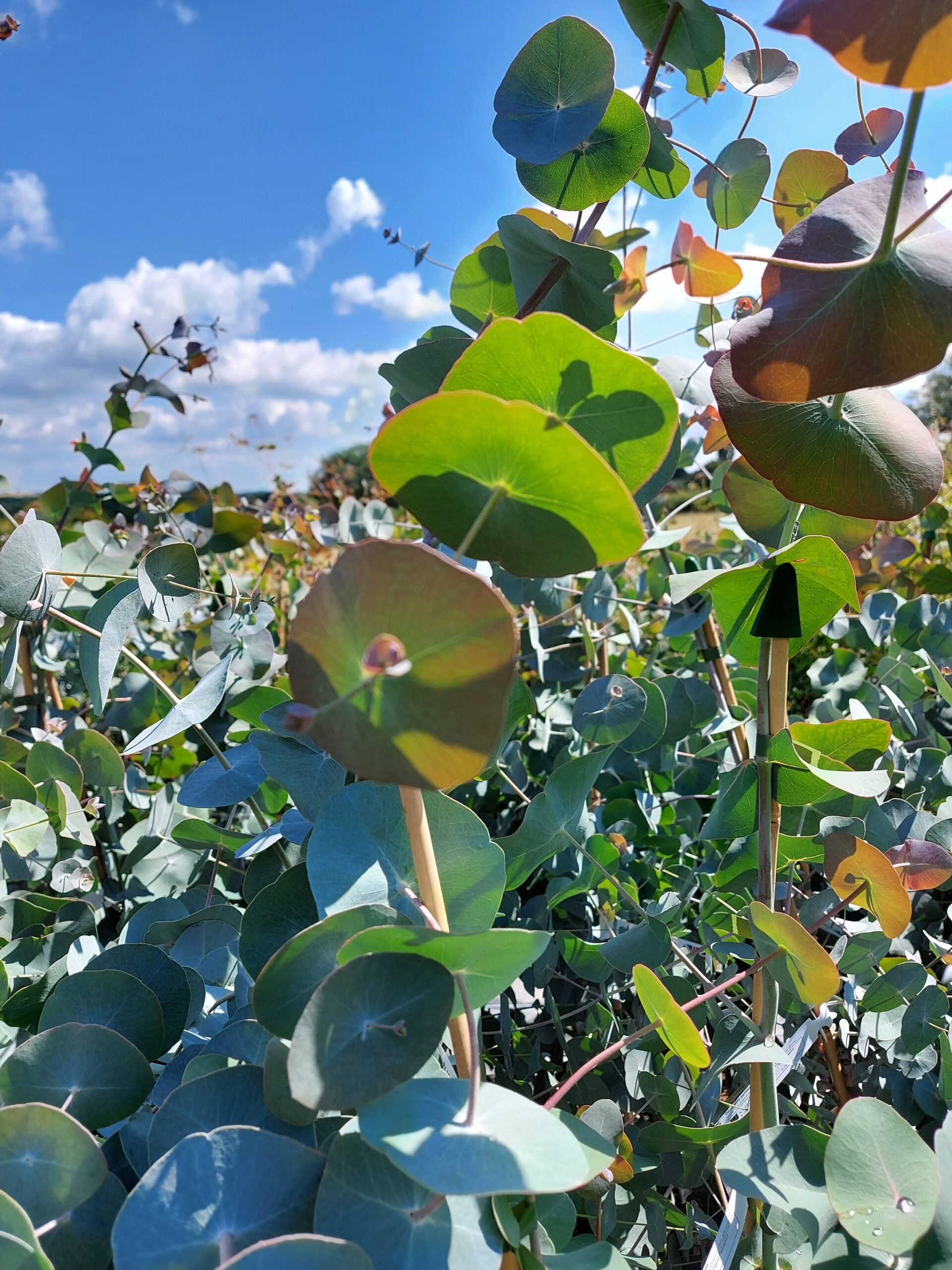
Eucalyptus perriniana – the Spinning Gum
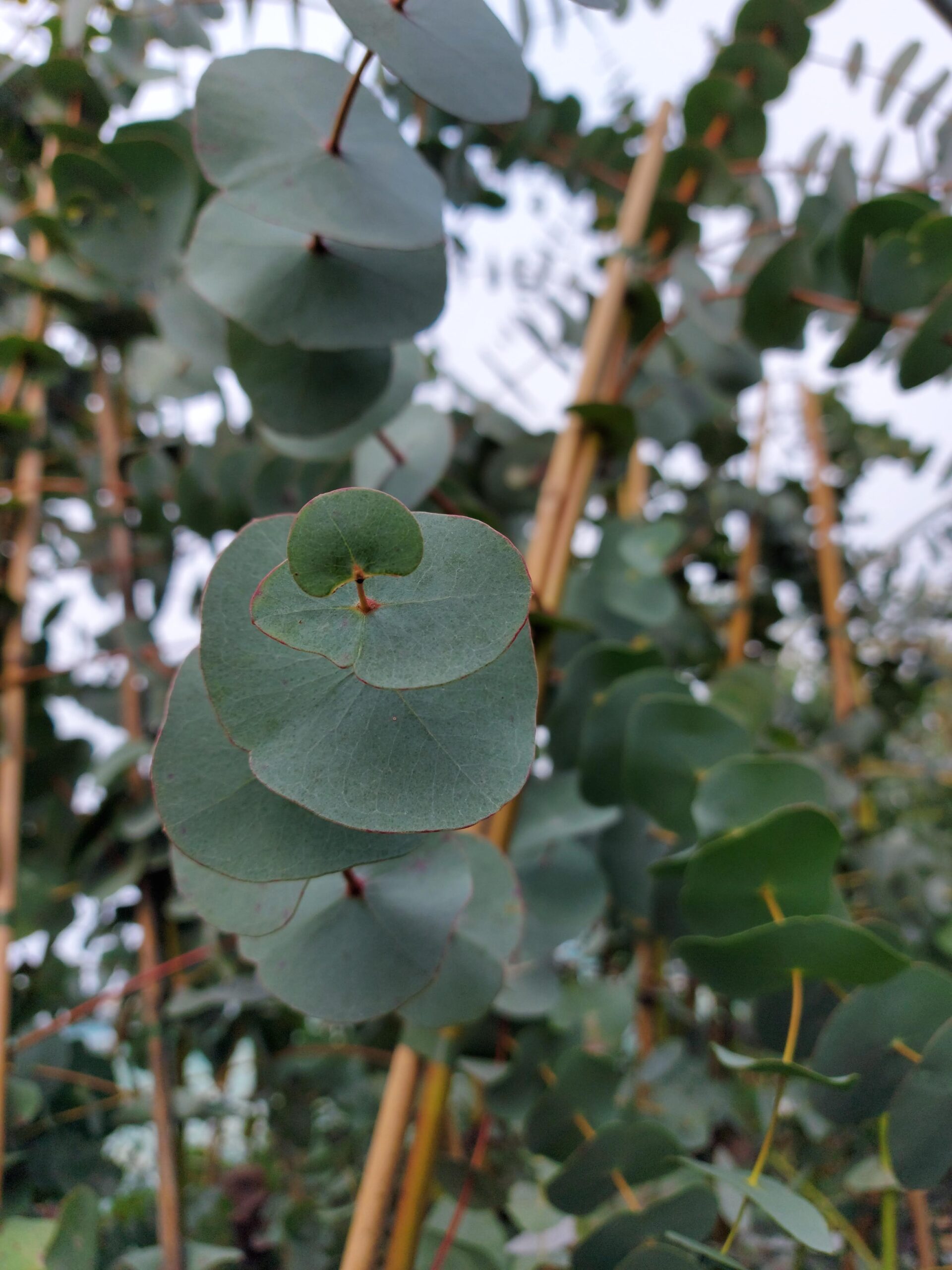
Fabulous Eucalyptus – one of our absolute favourites because it has really crazy foliage and bags of attitude! The juvenile form of foliage is disc shaped and completely surrounds the stem – scroll down to Biometrics for more details
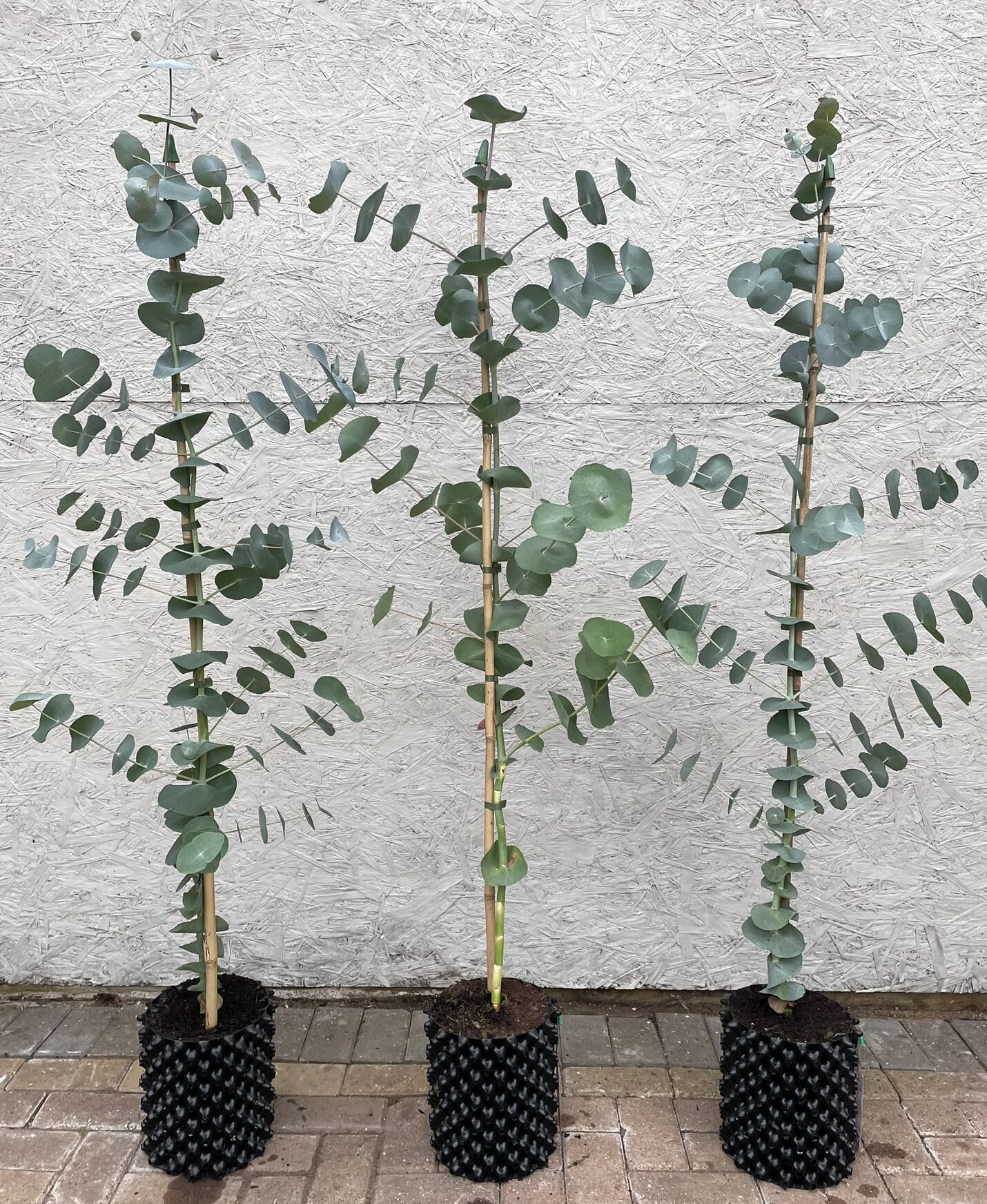
Very versatile for the gardener too! Grow Eucalyptus perriniana as a medium sized bushy shrub anywhere from 1.5m up to 3m – you choose the height OR grow it as a small tree. A mature Eucalyptus perriniana reminds me of a plum tree in stature.
AND you absolutely can enjoy Eucalyptus perriniana in a pot on your terrace; best grown as a multi-stemmed specimen. Click here to visit our Guidance Notes on how to successfully grow Eucs in containers and keep them alive!
Hop over to the ‘How to Use’ Tab to see how this species can be enjoyed or used in the landscape or garden – such as growing in a pot, as a bushy shrub, standard tree or for cut foliage etc.
The ‘Planting and Soil’ Tab advises on this Eucs preferred growing conditions– it’s likes and dislikes
The Trivia Tab is just that!! It contains fascinating information for botanical nerds like me! If you want to know why it’s called the Spinning Gum – nip over to this tab for the explanation.
Biometrics for Eucalyptus perriniana
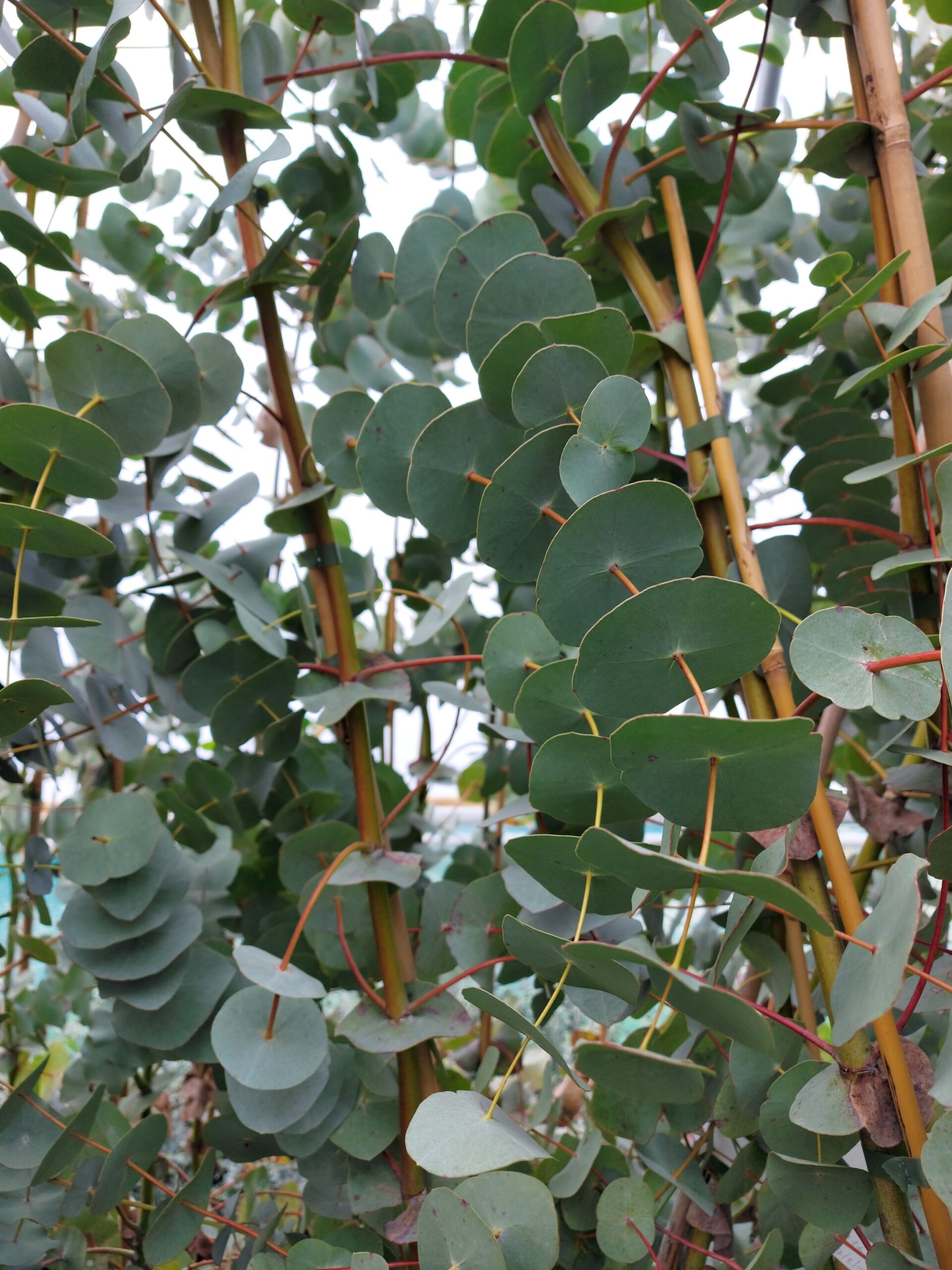
Shoots ‘n Leaves: Dramatic and quite remarkable. Very ornamental foliage. Young shoots are often violet in colour and covered in white wax to protect them from the blistering Australian sunlight.
Juvenile leaves are disc-shaped – like saucers and stack along the stem, completely wrapping around the young shoots – like a kebab. As the plant matures, newly produced foliage becomes more oval and arrow shaped.
Adult leaves are lanceolate, hanging in long elegant tresses in a gorgeous grey-green colour.
Bark: Smooth pale grey-silvery bark with olive green and pale copper highlights, shredding in ribbons with age.
Flowers: White and displayed in groups of three in late summer
Leaf Aroma: Intense, and clean – highly aromatic – powerfully strong typical Eucalyptus aroma – just wonderful
Rate of Growth: moderately fast at approx. 1.0-1.5 metres per year
Height in maturity, if left unpruned: after about 15-20 years, Eucalyptus perriniana could reach approximately 6-7m, although some specimens can attain a greater height under optimal conditions. Easy to keep smaller by regular pruning – March 18th and end of May.
If pruned, it can be trained to form a bushy screening tree, a lollipop standard or a multi-stemmed bush like a shrub rose, but with much better foliage! Responds well to coppicing (when mature) and pollarding, when done at the right time of year. Unless you are growing for cut foliage, please refrain from voluntarily electing to prune your Eucalyptus from August through to February; it can kill it.
To receive monthly pruning and aftercare advice, sign up to our Gumnut Club – its free and you can unsubscribe at any time. To subscribe – just call or ping us an email to [email protected]
Click here for further advice on pruning can be found in our Guidance Notes
Click here to visit our pruning video
FAQ: How do I keep the young, circular leaves, because after a couple of years of growth, the new leaves being produced have changed shape to being lanceolate – long and thin?
The easiest way to keep your Spinning Gum producing those lovely round leaves is to grow it as a bushy shrub or shub-onna-stick. You achieve this by pollarding or hard pruning around March 18th (National Eucalyptus Day, UK). Do this every spring and then tip prune the new annual growth at the end of May, during June and a little during July. Click here to read more about National Eucalyptus Day and why it is important
Click here to go to our Pruning Guide and view the full details.
Hardiness: Good hardiness rating. Once established: Extremely hardy and tolerates exposed conditions Long renowned for being cold hardy in the UK. Root-system should be happy down to -14 to -16°C mark, once mature.
Hardiness in Eucalyptus is governed by
- provenance of the seed (all our seed is sourced from frosty or cold locations)
- how it is grown (i.e. high nitrogen levels reduces cold tolerance),
- the age of the tree – the older your tree, the hardier it will be. Younger Eucs are more susceptible to frost damage.
- how long it has been planted in the ground. The deeper you can encourage the rooting by digging a deep planting pit at the time of installation, the quicker your tree will establish and you will increase its ability to survive cold winters. See our planting notes for more details.
For more information on how to increase the winter hardiness of your Eucalyptus – click here to see our Guidance Notes.
These notes on how to help your Euc become more hardy in your garden setting are quite long and I’ve been told ‘not for the faint-hearted’! They are meant to be quite all-encompassing and well-intentioned.
You can always skip to the last page to look at the salient points!